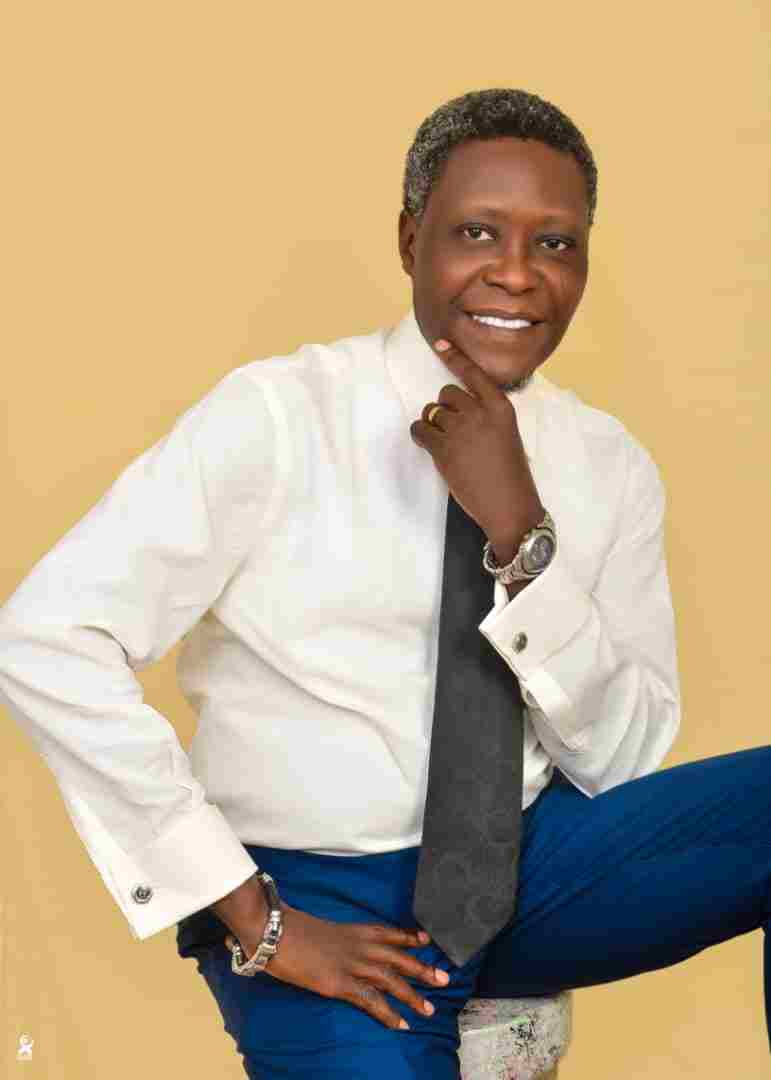
By Stephen Onimisi Obajaja Esq.
1960 is widely regarded as ‘’the African year’’. Most African countries, seventeen (17) of them gained ‘’independence’’ in that landmark year following the massive wave of decolonisation across the globe. Save for the black star of the then Gold Coast, now Ghana in 1957, and more in 1963, the liberation wars that culminated in the others in the 1970’s, 1980’s and the 1990’s, Africans gained ‘’independence’’ of sorts as it has become manifest today in that glorious, golden year of 1960.
The words of Chief Obafemi Jeremiah Awolowo at Lancaster House, London echoes still when he spoke in 1957 and proposed April 1st 1960 for Nigeria’s independence. Though the then Secretary for the Colonies, Alan Lennox – Boyd later announced October 1st 1960. It was still 1960, right? The Union Jack was then lowered at the grand Tafawa Balewa Square in Lagos at midnight of September, 30, 1960 as the Green and White flag of a new and independent Nigerian nation was hoisted.
Martin Luther King Jr. (MLK) weighed in on that momentous time in Africa as the civil rights campaign and the struggle for true black emancipation heated up the polity in America. The supposed independence of African States helped the King to raise the decibel of the civil rights movement in America at Ghana’s independence in the sermon ‘’The Birth of a New Nation’’ thus;
‘
’there is something in the soul that cries out for freedom. There is something deep down within the very soul of man that reaches out for Canaan. Men cannot be satisfied with Egypt. They tried to adjust to it for a while. Many men have vested interests in Egypt and they are slow to leave. Egypt makes it profitable to them, some people profit by Egypt. The vast majority, the masses of people never profit by Egypt., and they are never content with it. And eventually they rise up and begin to cry out for Canaan’s land’’.
That, as King captured in a paragraph is the African story of independence and its American cousin – the bitter struggle for the emancipation of the black man. The Civil Rights Bill eventually passed in Congress in 1964 when Lyndon Baines Johnson (LBJ) followed through on the commitment of John Fitzgerald Kennedy (JFK) who was assassinated in November, 1963. JFK was sold to the course of the negro and the Civil Rights Bill to which thankfully LBJ showed fidelity after the assassination of JFK and the Bill passed in Congress the following year shortly after Kennedy was killed.
South Africa was liberated from the visceral grip of the evil apartheid regime with the election of Nelson Rolihlahla Mandela (the Madiba) as President of the Republic of South Africa in the first multi – racial elections in 1994 in the country that styles itself ‘’the rainbow nation’’. However, it is noteworthy that the nations that shared borders and economic and historical affiliations with the rainbow nation did not fare much better. The apartheid government in South Africa showed its overbearing influence in South West Africa (now Namibia), Mozambique, Southern Rhodesia (now Zimbabwe) and Angola. These countries proved they were a different kettle of fish entirely as the chequered history of decolonisation in Africa goes.
Namibia became a hotbed of violence when the former Trust territory known as South West Africa and administered by South Africa was held in the jugular and asphyxiated by the same country to which it was entrusted. The South West Africa People’s Organisation (SWAPO) fought bitterly until 1990 before the anti-apartheid fervour sweeping across Africa weakened South Africa’s resolve and forced it to let the country rechristened Namibia go albeit reluctantly with the election of Sam Nojuma as President of that beautiful country under the auspices and supervision of the United Nations.
The Portuguese would not let Mozambique breathe and with South Africa in cahoots, the Mozambique Liberation Front (FRELIMO) fought a decade long war to enthrone independence in 1975. South Africa then pursued a policy of destabilisation against the government in Maputo by funding and giving military support to the violent anti – government group, RENAMO. It spilled over to 1986, when the President, Samora Machel’s airplane was pulled down in the South African mountains in a sordid affair pointing to the complicity of the evil apartheid regime. They killed him because of his opposition to apartheid and support for political and economic liberation across Africa.
The minority white racist regime in Southern Rhodesia – Zimbabwe – epitomised by Ian Smith’s unilateral declaration of independence (UDI) desperately clung onto power until 1980. The Zimbabwean war of independence was a brutal one known as the ‘’bush war’’ and lasted from 1964 to 1979 culminating in the establishment of a black majority government led by Robert Mugabe in 1980. It was a beautiful day on the 19th of April, 1980 when the Honourable Robert Nesta Marley OM) sang the revolutionary item ‘’Zimbabwe’’ at the Rufaro Stadium in Harare to commemorate Zimbabwe’s independence. Unfortunately, things went as they did with Zimbabwe as it is often the case with Africa. We live with dashed hopes.
Angola is unique. It fought a violent war of independence. Political movements in Angola fought the proxy wars of colonial interests as the devastating war of independence pitted rival political movements with support from rival West and East bloc of the cold war era and/or colonial interests against each other. The Angolan Nationalist Forces of The Popular Movement for the Liberation of Angola (MPLA), The National Union for the Independence of Angola (UNITA), and The National Liberation Front of Angola (FNLA) fought themselves and Portugal for control. Portugal withdrew from Angola as the nation descended into civil war with truce negotiated with battle wary but spent forces who agreed to a fragile peace that ushered in the government led by Agostinho Neto from 1975 to 1979. However, the war resumed as soon as peace was negotiated and agreed.
A bit back in history, the second King of the Belgians, Leopold II eviscerated the Congo. He owned Congo, then known as the Congo Free State as a personal estate and other colonial powers duly acknowledged that at the Berlin Conference of 1884. An estimated three million Congolese were killed for the vast resources Congo held. At independence in 1960, the Prime Minister, Joseph Kasavubu, the secessionist in Katanga, Moise Tshombe and critically, President Patrice Lumumba were pawns in the Belgian game of chess. Lumumba, the young President represents the face of the brutality of the West when their economic and political interests were threatened. He was so graphically and mercilessly executed shortly after Congo’s independence.
Then Congo was renamed Zaire in 1971 by Mobutu Sese Seko and later the Democratic Republic of Congo after his fall from power in 1997. This country is a peculiar case in the World. At a point, the United States considered Zaire as its bulwark for the push back against the Soviet Union and Communism in Africa and President Ronald Raegan hosted the brutal dictator, Mobutu who ruined Zaire at the lawns of the White House in 1974. A very significant move at the time. You would be worn thin in your quest to find a more unfortunate country. Till this day, the war for Congo’s vast resources continues.
There was Burundi and Rwanda. The two countries are intertwined by their ethnic, political and economic history. When the aircraft carrying the President of Rwanda and Burundi, Juvenal Habyarimana and Cyprien Ntaryamira (both Hutu) was shut down over the skies of those hilly plains in 1994, the Rwandan tragedy ensued as long held ethnic grudges, a legacy of colonialism erupted into full scale barbarism as an estimated 1 million Rwandans (tutsi’s and moderate hutu’s) were killed in 90 days of unimaginable savagery and on a scale never seen before.
The Rwandan horror would not go away till this day. The genocide museum in Kigali is a sore and constant reminder of what infinite evil humans are capable of. The fault lines of independence and the quest for continued colonial control unleashed that unspeakable tragedy. Then after Rwanda, we swore ‘’never again’’! The real tragedy is that it is happening again all over Africa. Whatever happened to our resolve not to relive the Rwandan horror?
There still was Prime Minister, Abubakar Tafawa Balewa in Nigeria, toppled and assassinated in a violent Military coup in 1966 that left Nigeria scarred forever and there was Prime Minister and then President, Francis Kwame Nkrumah in Ghana before Rwanda and when Congo and South Africa were happening. Nkrumah’s was particularly painful. It was the end of the early promise of revolutionary leadership in Africa at independence when the rest of Africa did not heed his wise counsel.
The Osagyefo, Kwame Nkrumah was the one who warned that if we do not organise ourselves into a single country, a single army (an African High Command) and a single currency, we would not survive the onslaught that would come and we would never be truly independent. Words of a sage who was taken out for he saw the tomorrow which is the African reality today. Where he saw clearly and advocated African unity, others thought him ambitious and was positioning himself to rule a United States of Africa. In the end they foisted an ineffective continental organisation on all of us.
It is important to reflect on the African past and the troubles that followed the hope of independence as I have done here as Nigeria continues to celebrate or merely marks its 65th year of independence and transition to self-rule rather than colonial rule. It is why in wishing Nigeria well that I have dovetailed into a bit of history to show how the promise of independence was never realised in almost all African nations.
Our country is a prime example of the dashed hopes of independence 65 years after the African year. Nigeria is a country in a perpetual state of flux in an endless search for nationhood. The dream of independence and the boundless hope it held for the most populous black nation on earth soon dissipated and the perpetual search for the semblance of a true nation continues.
When Nigeria seemingly could not make the right turn at every epochal and material time in its chequered history (notably the many unnecessary coups, the June, 12 election debacle and many elections that would follow after 1993), we got here and we are here. As that iconoclast, William Shakespeare wrote, ‘’there is a tide in the affairs of men, which taken at the flood, leads on to fortune; omitted, all the voyage of their life is bound in shallows and in miseries. On such a full sea are we now afloat. And we must take the current when it serves, or lose our ventures’’. Nigeria did not take that full tide that leads unto glory, even though it has had many opportunities to take the right turn. Our country just refused to do so and it is 65 years hence.
Now we have come full circle and it is pertinent to ask the question ‘’Are our Nigerian lives therefore bound in shallows and in miseries?’’ It may well be but it does not have to be so for too long. We can pull back from the precipice if we get altruistic and pursue the common good. The ultimate guiding light being what the great Utilitarian, Jeremy Bentham simplifies as ‘’the greatest happiness of the greatest number’’.
Bentham did not stop there. He admonished further ‘’create all the happiness you are able to create; remove all the misery you are able to remove. Every day will allow you, will invite you to add something to the pleasure of others, or to diminish something of their pains’’.
Our fervent hope therefore is that Nigeria will wish its diverse people’s ‘’Happy Independence Day’’ one day and it will matter. I look forward to the day when celebrations of Nigeria’s independence will not sound hollow but indeed truly ring true for Nigerian’s and all the people who share in this nation space despite all the troubles that seem to dog us all our lives and forever.
May this time, 65 years since the African year be a time of reawakening for Nigeria and the rest of Africa.
Stephen Onimisi Obajaja, lawyer, writer, a policy and public affairs analyst is a partner at the Lagos law firm of Fountain Court Partners, the Chairman of the Board of Trustees of the John Adebisi Obajaja Foundation (JAOF) whose main object is “to particularly support posthumous and educationally disadvantaged children, orphans, the poor and the less privileged in society” and he was former Secretary of the Nigerian Bar Association (NBA), Lagos Branch.